
🇨🇳 China
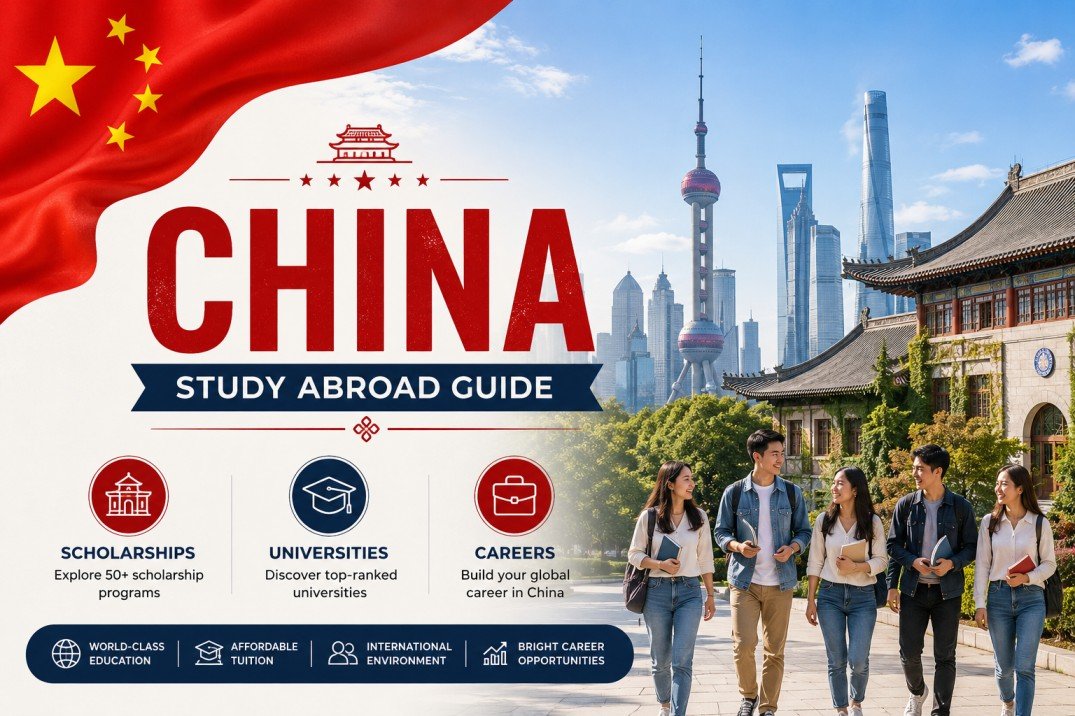
About China
Study in China: A Decision That Can Change Your Future
A few years ago, one of my students sat in my office with a simple question: “Everyone talks about studying in the USA, UK, and Australia. Is China really worth considering?” And should I go to study in China.
In fact, even I had the same point of view years ago. Like many people, I assumed China was only famous for manufacturing and business. Then I started working with students who actually chose Chinese universities. Within a couple of years, I saw something unexpected.
Students who couldn’t afford universities charging $30,000–$60,000 per year were earning degrees from internationally recognized universities, receiving generous scholarships, learning alongside classmates from more than 100 countries, and graduating with excellent career opportunities.
Some even completed their degrees almost free of tuition through fully funded scholarships. That completely changed my perspective. Since then, I’ve guided many students through the Chinese university application process, and one thing has become very clear:
China has quietly become one of the best study destinations in the world for international students.
Whether you’re interested in Business, Artificial Intelligence, Engineering, Medicine, Computer Science, International Relations, or Finance, there’s a good chance you’ll find a university that matches both your academic goals and your budget.
Why More Students Are Choosing to Study in China Even Having Multiple Options
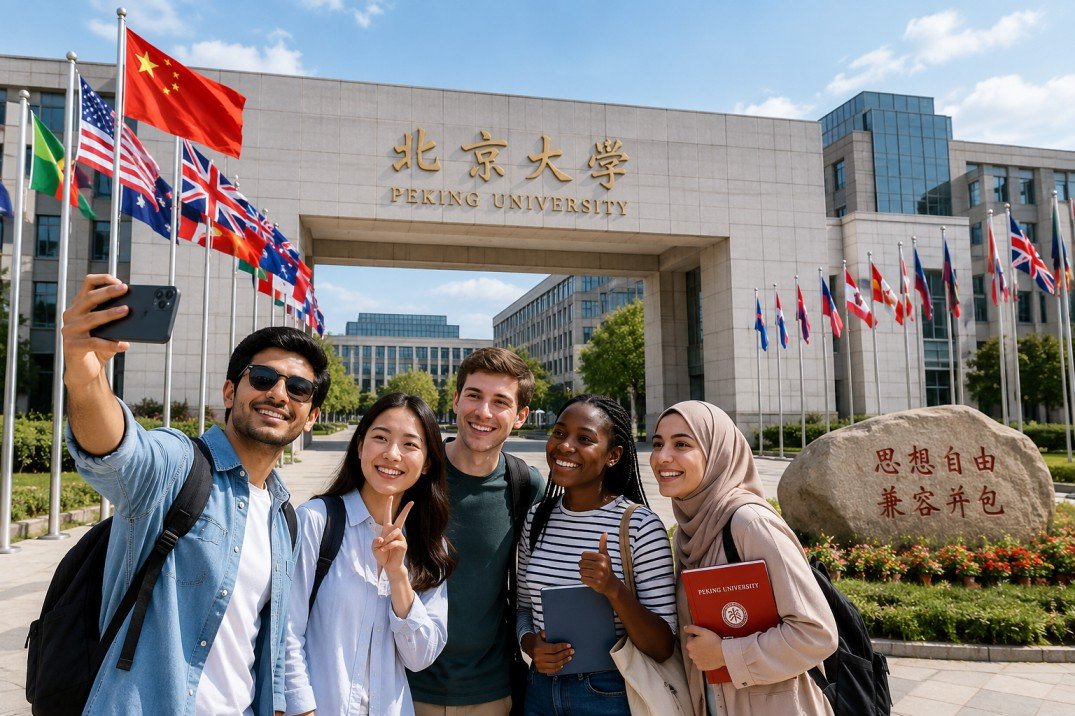
A group of international students taking photos together in front of a modern Chinese university entrance with national flags representing different countries.
When students first contact me, they usually have three concerns:
- Can I afford studying abroad?
- Will my degree be internationally recognized?
- Will it help my career?
China answers all three surprisingly well.
Over the last decade, Chinese universities have climbed global rankings while investing billions of dollars in research facilities, smart classrooms, modern laboratories, and international partnerships. Today, China hosts more than 490,000 international students from around the world in normal academic years, making it one of the most popular destinations for global education.
Benefits of Studying in China
1. World-Class Universities
China is home to many globally respected universities that consistently appear in international rankings.
Some universities specialize in engineering.
Others are known for business, medicine, computer science, architecture, economics, and technology.
Many collaborate with universities in Europe, Australia, Canada, and the United States.
This means your degree carries international recognition in many countries.
2. Affordable Education Compared to Western Countries
This is usually the first thing my students notice.
Let’s compare average annual tuition.
| Country | Average Tuition (USD) |
|---|---|
| USA | $22,000–50,000 |
| UK | $15,000–40,000 |
| Germany | $5500 – 28000 |
| Australia | $20,000–45,000 |
| China | $2,500–8,000 |
Even without a scholarship, China is considerably more affordable than many traditional study destinations. For many families, this difference can save tens of thousands of dollars over the course of a degree.
3. Excellent Scholarship Opportunities
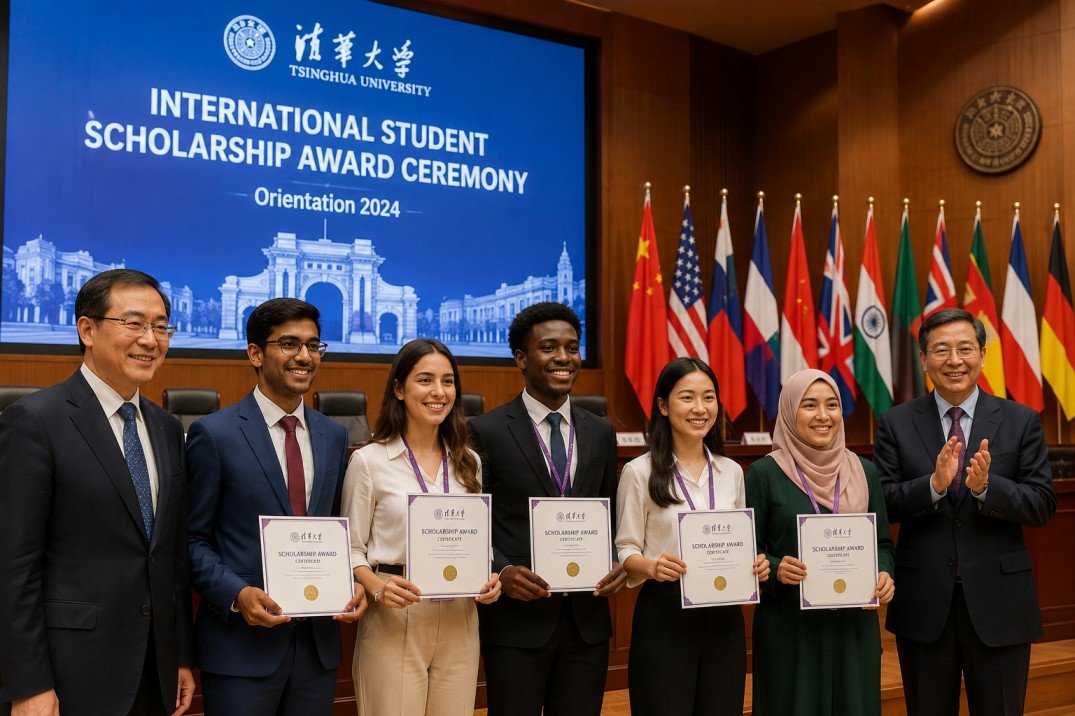
One of the biggest reasons students choose China is the wide variety of scholarship programs.
Common options include:
Chinese Government Scholarship (CSC)
CSC is one of the most popular fully funded scholarships.
Depending on the program, it may include:
- Full tuition
- Accommodation
- Monthly living allowance
- Medical insurance
Provincial Government Scholarships
Many provinces offer their own scholarships to attract international students.
These often cover:
- Partial tuition
- Full tuition
- Accommodation support
University Scholarships
Many Chinese universities provide merit-based scholarships for high-performing international students.
Even students who do not receive a government scholarship may qualify for university funding.
4. English-Taught Degree Programs
A mutual misconception is that student’s requirement speak Chinese before applying.
That isn’t true. Today, hundreds of bachelors, master’s, and PhD programs are taught entirely in English.
Popular English-taught fields include:
- Business Administration
- International Business
- Finance
- Artificial Intelligence
- Computer Science
- Data Science
- Civil Engineering
- Mechanical Engineering
- Medicine (MBBS)
- Economics
- International Relations
Learning basic Mandarin is still helpful for daily life and future employment, but it is not always a requirement for admission.
5. Modern Campuses with Outstanding Facilities

The first time many students arrive on campus, they’re surprised by how modern everything is.
Most universities offer:
- Digital libraries
- High-speed internet
- Advanced research laboratories
- Smart classrooms
- Innovation centers
- Student clubs
- Sports complexes
- International student offices
These facilities create an environment where students can focus on learning while enjoying campus life.
6. Safe and Comfortable Student Environment
Safety is another factor parents often ask about.
Many Chinese university campuses provide:
- 24/7 security
- Student dormitories
- Campus health centers
- International student support offices
- Organized cultural activities
This structured environment helps new students adjust more comfortably during their first few months.
7. Rich Cultural Experience
Studying abroad isn’t only about earning a degree. It’s also about experiencing a different way of life.
Living in China gives you opportunities to:
- Explore historic landmarks
- Experience traditional festivals
- Taste regional cuisines
- Learn basic Mandarin
- You can build friendships with students from around the world
These experiences often become just as valuable as classroom learning.
Popular Courses to Study in China
Students from around the world commonly choose programs such as:
1- Business & Management
China’s growing economy makes it an excellent place to study business, entrepreneurship, supply chain management, and international trade.
2- Engineering
Chinese universities are especially respected for:
- Mechanical Engineering
- Civil Engineering
- Electrical Engineering
- Chemical Engineering
- Robotics
3- Computer Science & Artificial Intelligence
China is investing heavily in artificial intelligence, cloud computing, big data, and software development, making it an exciting destination for students interested in technology careers.
4- Medicine (MBBS)
Many international students choose China for medical education because tuition is often more affordable than in several other countries, while many universities offer English-medium MBBS programs recognized by international medical councils (subject to each country’s recognition requirements).
5- Finance & Economics
With China playing a major role in the global economy, students gain exposure to international markets, banking, investment, and financial technology.
Top Universities in China for International Students
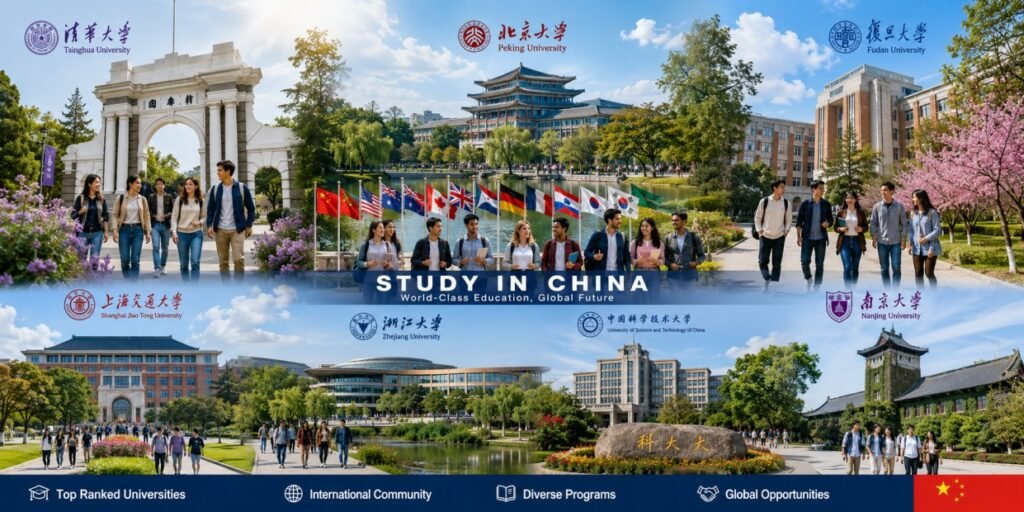
One question I hear almost every week is:
“Which university should I choose?”
The answer depends on your academic goals, budget, and preferred field of study. Fortunately, China has hundreds of universities that welcome international students.
Here are some of the most recognized institutions:
| University | Known For |
|---|---|
| Tsinghua University | Engineering, AI, Computer Science |
| Peking University | Business, Economics, International Relations |
| Fudan University | Medicine, Business, Finance |
| Shanghai Jiao Tong University | Engineering, Technology |
| Zhejiang University | Artificial Intelligence, Research |
| Wuhan University | Law, Computer Science |
| Harbin Institute of Technology | Aerospace, Robotics |
| Nanjing University | Sciences, Humanities |
| Sun Yat-sen University | Medicine, Business |
| Xi’an Jiaotong University | Engineering, Technology |
Many of these universities appear in international rankings and have partnerships with universities in Europe, Australia, North America, and other parts of Asia.
Admission Requirements
The application process is easier than many students expect, but attention to detail is important.
Most universities ask for the following:
1- Academic Certificates
- High school certificate (Bachelor’s)
- Bachelor’s degree (Master’s)
- Master’s degree (PhD)
Always prepare clear scanned copies of your academic documents.
2- Passport
Your passport should generally be valid for at least six months beyond your planned travel date.
3- Academic Transcripts
Universities want to review your previous academic performance.
Keep both original and translated versions if required.
4- English Language Proof
Many English-taught programs accept:
- IELTS
- TOEFL
- Medium of Instruction (MOI) certificate (accepted by some universities)
- University’s own English assessment (where applicable)
Always check the specific requirements because they vary from one university to another.
5- Recommendation Letters
Master’s and PhD applicants are often required to submit one or two recommendation letters from professors or employers.
A strong recommendation can strengthen your application.
6- Study Plan or Personal Statement
This is one document students often underestimate.
Instead of writing a generic essay, explain:
- Why you chose China
- Why you selected that university
- Your academic background
- Your future career plans
- How the program aligns with your goals
A thoughtful and personalized statement usually stands out more than one filled with complicated vocabulary.
Step-by-Step Guide to Apply for a Chinese University
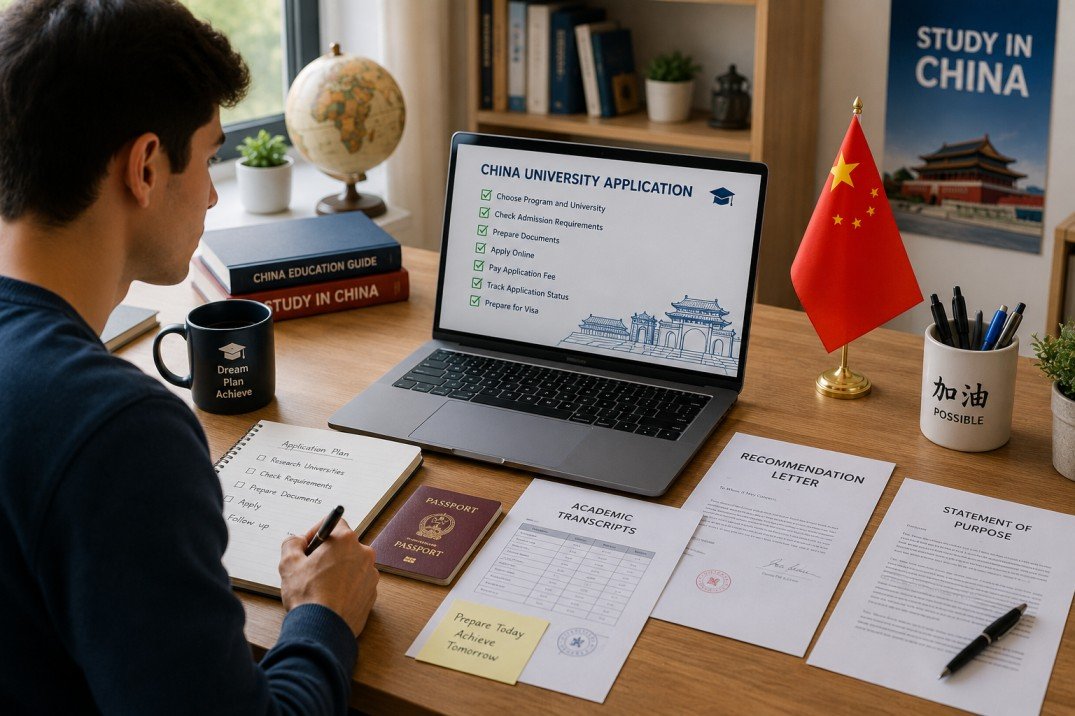
When helping students, I usually follow this process.
Step 1: Choose Your Program
Research universities that match your academic interests.
Compare:
- Tuition fees
- Scholarships
- English programs
- University rankings
- City location
Step 2: Prepare Your Documents
Create a folder containing all required documents.
Double-check spellings, passport details, and dates.
Small mistakes can delay your application.
Step 3: Apply Online
Most universities have online application portals.
Complete every section carefully and upload all requested documents.
Avoid rushing. Take time to review everything before submitting.
Step 4: Apply for Scholarships
Never assume you won’t qualify.
Many students skip scholarship applications because they think competition is too high.
I’ve seen students with normal grades obtain partial or even full scholarships because they submitted well-prepared, complete applications.
Step 5: Receive the Admission Letter
If selected, you’ll usually receive:
- Admission Letter
- Visa application documents
- Enrollment instructions
Read everything carefully and follow the university’s deadlines.
Step 6: Apply for a Student Visa
Most international students apply for a Chinese student visa after receiving official admission documents.
Prepare:
- Passport
- Admission letter
- Visa application form
- Passport photographs
- Required supporting documents
Visa requirements may vary depending on your country, so always verify the latest information with the Chinese embassy or consulate in your region.
Cost of Studying in China
One reason China continues attracting international students is affordability.
Average Annual Tuition
| Program | Estimated Tuition (USD) |
|---|---|
| Bachelor’s | $2,500–6,000 |
| Master’s | $3,000–8,000 |
| PHD | $3,500–9,000 |
Scholarships can significantly reduce or even eliminate these costs.
Monthly Living Expenses
Living costs depend on the city.
Large cities like Beijing and Shanghai are generally more expensive than cities such as Wuhan, Xi’an, or Harbin.
Typical monthly expenses:
| Expense | Average Cost (USD) |
|---|---|
| Accommodation | $100–300 |
| Food | $100–300 |
| Transportation | $20–50 |
| Internet & Phone | $10–30 |
| Personal Expenses | $100–250 |
Student Life in China

One thing students frequently tell me after arriving is:
“I didn’t expect campus life to be this active.”
Universities organize activities throughout the year, including:
- Cultural festivals
- Sports tournaments
- Language exchange clubs
- Volunteer programs
- Entrepreneurship competitions
- International student gatherings
These events make it much easier to meet people and build friendships.
Learning Mandarin: A Hidden Career Advantage
Although many degree programs are taught in English, learning basic Mandarin can make everyday life much easier.
It can also improve your chances of finding internships and jobs in multinational companies that operate in China or work closely with Chinese businesses.
Even learning simple conversations can make shopping, traveling, and networking more enjoyable.
Career Opportunities After Studying in China

Many students focus only on getting admitted, but it’s equally important to think about life after graduation.
China’s economy offers opportunities in sectors such as:
1- Technology
Companies working in:
- Artificial Intelligence
- Software Development
- Big Data
- Cloud Computing
- Cybersecurity
are continually seeking skilled graduates.
2- Engineering
Graduates can pursue careers in:
- Construction
- Manufacturing
- Renewable Energy
- Infrastructure
- Robotics
- Automotive industries
3- Business & Finance
International graduates often work in:
- International trade
- Banking
- Marketing
- Supply chain management
- Financial consulting
- Import and export businesses
4- Healthcare
Medical graduates may continue with licensing pathways, postgraduate training, research, or careers in healthcare systems, depending on the regulations of the country where they plan to practice.
Research & Higher Education
China invests heavily in research and innovation, creating opportunities for postgraduate study and research careers in science, engineering, technology, and business.
Can International Students Work during study in china?
Rules regarding student employment vary by institution and local regulations.
Some universities allow part-time work or internships with the necessary approvals.
Always confirm the latest regulations with your university and immigration authorities before accepting any employment.
Global Career Benefits of a Chinese Degree
Graduating from a recognized Chinese university can help you pursue careers not only in China but also in many other countries.
- Employers often value graduates who have:
- International education experience
- Cross-cultural communication skills
- Adaptability
- Global business knowledge
- Problem-solving abilities
These qualities are increasingly important in multinational organizations.
Best Cities to Study in China
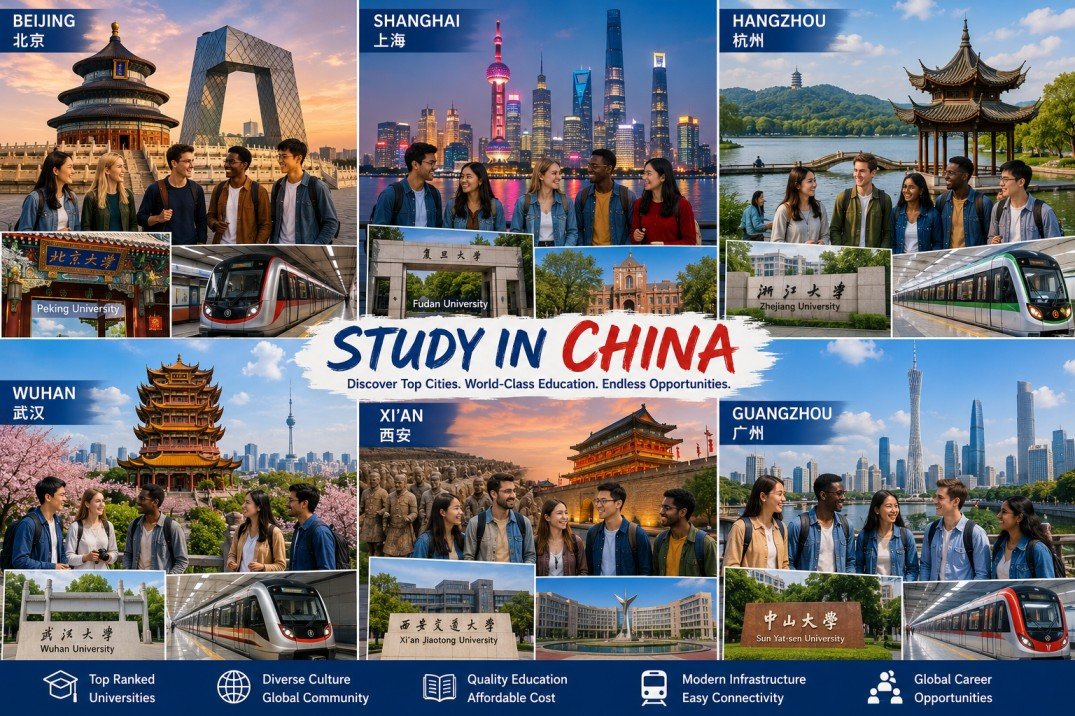
One of the most student ask question to me is:
“Which city should I choose?”
There’s no single “best” city. It depends on your budget, academic goals, lifestyle, and the type of experience you’re looking for.
Here’s a quick comparison:
| City | Best For | Estimated Monthly Living Cost (USD) |
|---|---|---|
| Beijing | Top universities, research, government institutions | 800-1,200 |
| Shanghai | Business, finance, international exposure | 900–1,300 |
| Hangzhou | Technology, innovation, AI | 650–1,000 |
| Wuhan | Affordable living, engineering, medicine | 450–800 |
| Xi’an | History, engineering, lower living costs | 450–750 |
| Guangzhou | International trade, business, manufacturing | 600–950 |
If you’re studying Business or Finance, Shanghai offers excellent networking opportunities. If your priority is affordability, Wuhan and Xi’an are often great choices.
For technology enthusiasts, Hangzhou has become a major innovation hub thanks to its growing tech ecosystem.
Study in China Practical Tips I Always Share With Students
An international student using translation apps, digital maps, online payment apps, and public transportation in China while exploring the city confidently.
After helping many students prepare for China, I’ve noticed that small preparations can make a big difference.
Download Useful Apps Before You Travel for Study in China
Some apps can make your first few weeks much easier.
Navigation
- Baidu Maps
- Apple Maps
- Google Maps (for planning before arrival, though access may vary)
Translation
- Google Translate (offline language packs)
- Microsoft Translator
Communication
WeChat is too much a messaging app. Students often use it for communication, university announcements, digital payments, and connecting with classmates.
Payments
China relies heavily on digital payments.
International students may be able to use apps such as Alipay or WeChat Pay after meeting the platform’s verification requirements. Check the latest setup process before you arrive.
Transportation
China’s metro systems are modern, affordable, and easy to use.
Most cities also offer student discounts on public transportation.
How to Increase Your Scholarship Chances to Study in China
Many students believe scholarships are awarded only to students with perfect grades.
That’s not always true.
I’ve seen applicants with average academic records receive scholarships because they prepared stronger applications overall.
Here are a few things that can improve your chances:
1- Start Early
Begin preparing your documents several months before the deadline.
Last-minute applications often contain avoidable mistakes.
2- Write a Strong Study Plan
Avoid copying templates from the internet.
Admissions officers read thousands of applications every year.
A genuine story about your academic journey and future goals is far more convincing than a generic essay.
3- Apply to Multiple Universities
Don’t limit yourself to one university.
Applying to several institutions increases your chances of both admission and scholarship offers.
4- Keep Your Documents Organized
Create separate folders for:
- Passport
- Academic certificates
- Transcripts
- Recommendation letters
- Personal statement
- Medical documents (if required)
Being organized saves time when deadlines approach.
Common Mistakes International Students Should Avoid For Study in China
I’ve seen many students delay or even lose admission opportunities because of avoidable errors.
1. Applying Too Late
The deadlines of scholarship often close months before classes start.
Start researching early and keep track of important dates.
2. Ignoring University Requirements
Every university has different admission criteria.
Never assume the requirements are identical across institutions.
3. Choosing a University Based Only on Rankings
A university that ranks lower overall may still be the best choice for your specific subject.
Attention on program quality, research opportunities, faculty and scholarship availability.
4. Submitting Incomplete Documents
Missing signatures, expired passports, unclear scans, or incorrect translations can delay your application.
Review every document carefully before submission.
5. Underestimating Living Costs
Tuition is one portion of your budget.
Remember to plan for:
- Accommodation
- Food
- Transportation
- Health insurance
- Books and study materials
- Personal expenses
A realistic financial plan reduces stress after arrival.
6. Not Learning Basic Mandarin
Even if your degree is taught in English, learning a few everyday Mandarin phrases can make daily life much easier and help you connect with local people.
Is Studying in China Worth It?
From my experience working with international students, the answer depends on your goals.
If you’re looking for:
- Affordable education
- Internationally recognized universities
- Scholarship opportunities
- Modern campuses
- Exposure to one of the world’s largest economies
- A multicultural learning environment
- Strong career prospects
then China deserves a place on your shortlist.
Like studying abroad anywhere, success depends on your preparation, adaptability, and willingness to make the most of the experience.
Frequently Asked Questions (FAQs)
1- Can students study in China without knowing Chinese?
Yes. Many universities offer bachelor’s, master’s, and PhD programs taught entirely in English. However, learning basic Mandarin can make daily life and networking easier.
2- Is China affordable for international students?
Generally, yes. Tuition fees and living costs are often lower than in countries such as the USA, UK, and Australia, and scholarships can reduce expenses even further.
3- Can international students get scholarships in China?
Yes. Popular options include the Chinese Government Scholarship (CSC), provincial government scholarships, and university-specific scholarships.
4- Are Chinese degrees recognized internationally?
Many degrees from accredited Chinese universities are recognized internationally, but recognition can vary depending on your profession and the country where you intend to work. Always verify recognition requirements for your specific field.
5- What are the most popular courses in China?
Some of the most sought-after programs include:
- Business Administration
- Artificial Intelligence
- Computer Science
- Engineering
- Medicine (MBBS)
- Data Science
- Finance
- Economics
- International Relations
6- Can I stay in China after graduation?
This depends on current immigration and employment regulations. Some graduates continue with further studies, research, or employment opportunities if they meet the relevant legal requirements.
Final Thoughts
When I first started advising students, China wasn’t at the top of most people’s lists. Conversations usually revolved around the USA, the UK, or Australia.
Over time, that changed.
Students began sharing stories about modern campuses, supportive professors, affordable living, and friendships with classmates from every corner of the world. Many also told me that studying in China gave them confidence, international exposure, and career opportunities they hadn’t imagined before leaving home.
Studying abroad isn’t just about earning a degree. It’s about learning to adapt, solving problems independently, building a global network, and discovering opportunities beyond your comfort zone.
If China aligns with your academic goals, budget, and career plans, start researching early, compare universities carefully, prepare your documents well in advance, and apply for every scholarship you’re eligible for. A well-planned application today could be the first step toward an international education and a rewarding future.

🎯 Scholarships in China