
Russian Open Doors Scholarship 2027: Eligibility, Deadline & Benefits

Scholarship Details
Description
If you have ever searched for a scholarship in Russia, you have probably noticed the same problem: there are plenty of websites promising “fully funded” opportunities, but it is not always clear which ones are official, what they actually cover, or whether you are even eligible.
The Russian Open Doors Scholarship 2027 is one opportunity worth looking at closely. It is an international academic competition that can give successful applicants a route to tuition-free study at participating Russian universities under the Russian government quota.
The important part is that this is not simply a scholarship form. You are competing through different stages, and your academic background, portfolio, motivation and performance in the competition all matter.
Registration for the current 2026 cycle opened on August 20, 2026 with the main registration deadline of November 1, 2026. The opportunity is open for Bachelor’s, Master’s, Doctoral/PhD and Postdoctoral levels.
If you are considering applying, I would not wait until the final week. There are documents to prepare, a subject area to choose and, for shortlisted applicants, a second-stage assessment that requires proper preparation.
Russian Open Doors Scholarship 2027 All You Need To Know
| Scholarship detail | Information |
|---|---|
| Scholarship name | Russian Open Doors Scholarship |
| Country | Russia |
| Current cycle | 2027 |
| Application opens | August 20, 2026 |
| Main registration deadline | November 1, 2026 |
| Application fee | Free |
| Study levels | Bachelor’s, Master’s, Doctoral/PhD, Postdoctoral |
| Participation language | English or Russian |
| Eligible applicants | International students and eligible stateless persons |
| Main funding benefit | Tuition-free study under the Russian government quota |
| Subject areas | 14 broad academic subject areas |
| Application method | Online |
| Main competition website | Open Doors official portal |
| Degree universities | Participating Russian universities |
| Important point | Winning the competition does not mean every personal expense is automatically covered |
What is the scholarship of Russian Open Doors?
The Open Doors Russian Scholarship Project is an international academic competition designed for applicants who want to pursue higher education or research in Russia.
Think of it more like an academic selection competition than a traditional scholarship application.
Instead of simply submitting a form and waiting for a university admission committee, applicants first compete within an academic subject area. Depending on the level, there can be a portfolio stage, academic tasks and interviews.
The program currently covers areas ranging from Business and Management and Economics to Computer and Data Science, Engineering, Medicine, Artificial Intelligence, Education, Politics and Russian Language and Culture.
That range is useful because applicants do not all come from engineering or computer science backgrounds.
For example, a business graduate looking for a Master’s degree can explore the Business and Management or Economics and Econometrics areas instead of trying to force their profile into an unrelated field.
Who can Apply for Russian Open Doors Scholarship?
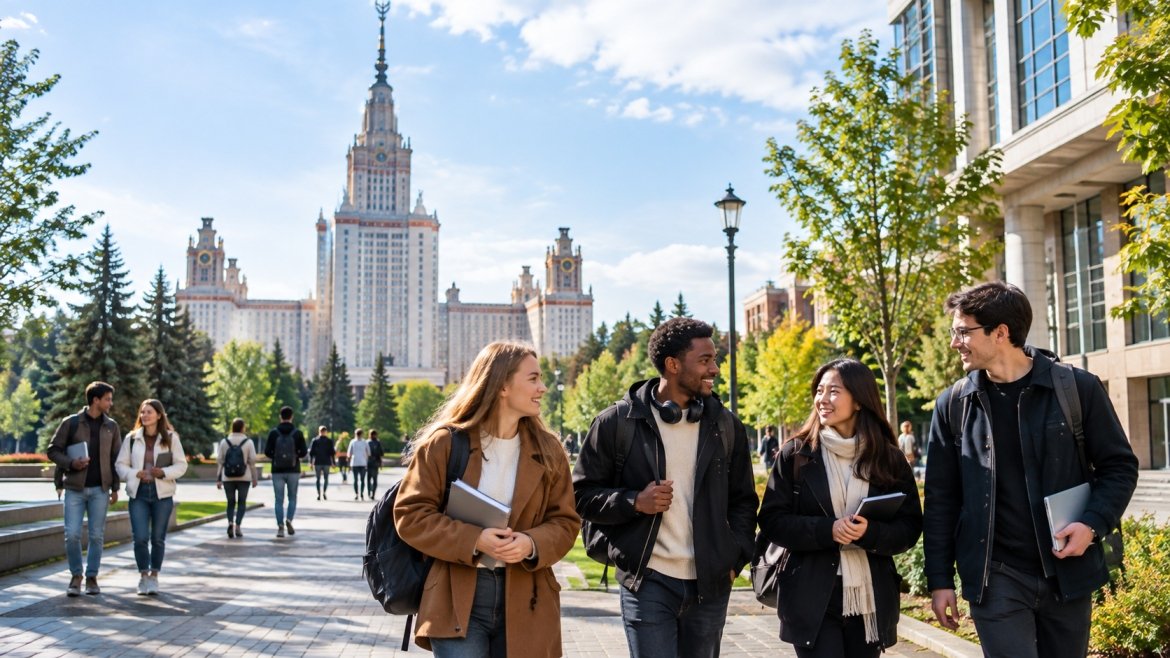
This mainly depends on your age, previous qualification and the study track you choose.
Bachelor’s applicants
For the 2026 competition, Bachelor’s applicants must be between 16 and 23 years old on the registration opening date.
You should also not already hold a Bachelor’s, Specialist or Master’s degree.
You must have, or be completing, an educational qualification that allows you to enter higher education under the rules of your country.
Master’s applicants
The Master’s route is particularly relevant for students who already have a Bachelor’s degree or an equivalent qualification.
For the 2026 cycle, applicants must be between 20 and 33 years old on the registration opening date.
You should not already hold a Specialist or Master’s degree.
If you are finishing your Bachelor’s degree during the relevant academic year, you may still be eligible, provided you meet the other requirements.
Doctoral / PhD applicants
The Doctoral track is intended for applicants moving toward PhD-level study.
For 2026, applicants must be between 22 and 35 years old on the registration opening date and must have a Specialist or Master’s-level qualification, or be due to obtain one during the relevant academic year.
You must not already have completed a doctoral degree.
Postdoctoral applicants
The Postdoctoral track is different.
The age of candidates must be from 24 to 39 years as of the date of opening of registration, and they must have already obtained a Candidate of Sciences, Doctor of Sciences or PhD degree.
This track is intended for researchers rather than students looking for their first postgraduate degree.
Fields of Study Russian Open Doors Scholarship
One of the first things I recommend doing is checking the subject areas before you start preparing your application.
The current Open Doors competition includes these broad areas:
- Applied Mathematics and Artificial Intelligence
- Biology and Biotechnology
- Business and Management
- Chemistry and Materials Science
- Clinical Medicine and Public Health
- Computer and Data Science
- Earth and Environmental Sciences for Sustainability
- Economics and Econometrics
- Education and Psychology
- Engineering and Technology
- Physical Sciences and Technology
- Politics and International Studies
- Russian Language and Culture
- Urbanism and Civil Engineering
This is important because your choice should make sense with your previous education and future plans.
For example, if you have a Bachelor’s degree in Finance, it’s reasonable to consider Business and Management or Economics and Econometrics.
Someone with a Computer Science background might be better positioned for Computer and Data Science or Applied Mathematics and Artificial Intelligence.
Don’t select a field simply because you think fewer people will apply to it. Your choice should be justified by your portfolio and later academic tasks.
Russian Open Doors Scholarship Benefits
The main attraction is tuition-free education.
Successful Bachelor’s, Master’s and Doctoral applicants can receive the right to study in Russia through the government quota for foreign citizens, with tuition funded through the applicable government arrangement.
For applicants who need Russian-language preparation before beginning their degree, a preparatory program may also be available under the applicable rules.
However, there is an important financial detail that many scholarship websites explain badly.
Is the Russian Open Doors Scholarship fully funded?
I would be careful with the phrase “fully funded.”
Tuition coverage is the central benefit.
But students should not assume that Open Doors will cover every expense from the time they leave home until graduation.
Depending on your circumstances, additional government grant support may be available for eligible students studying full-time in Russian. This can involve areas such as travel, accommodation, insurance and a monthly payment.
The conditions for this extra support are separate from just winning the competition.
So, when making your financial plan, treat tuition coverage as the confirmed core benefit and investigate any additional support you qualify for before making travel arrangements.
That small distinction can save you from a very unpleasant financial surprise later.
What Documents Are Required?
For the first stage, the key documents are relatively straightforward.
You should prepare:
- Passport
- Proof of your education level
- Motivation letter
- Academic transcript or other acceptable proof if your final degree certificate is not yet available
- Supporting achievement documents, where applicable
The passport information you enter in your application should match the passport you intend to use later.
If your academic documents are not in English or Russian, you will need an appropriate translation for the competition.
One useful point for applicants: you do not necessarily need to have every possible certificate before starting the application.
The portfolio allows applicants to provide information about relevant achievements, and additional supporting evidence can strengthen the portfolio where applicable.
So don’t postpone your entire application because you are still looking for one certificate from an old competition.
How to Write the Motivation Letter
This is one section where many otherwise strong applicants become too generic.
A weak opening might look like this:
“I am a hardworking and ambitious student who has always dreamed of studying abroad.”
There is nothing particularly memorable about it.
Instead, build your motivation around a clear connection:
Your background → your academic interest → your achievements → why this field → why Russia → what you plan to do next.
For example, a business graduate could explain how a university project, internship, business competition or financial research experience developed an interest in management or economics.
You do not need to invent an impressive story.
A simple, specific story is usually more convincing than exaggerated claims.
A practical motivation-letter structure
1. Start with your academic direction
Explain what you studied and what area you now want to develop.
2. Show evidence
Mention a project, research experience, internship, competition, work experience or academic achievement that supports your interest.
3. Explain your chosen subject area
Why Business and Management rather than simply “business”?
Why Economics and Econometrics rather than just “I like economics”?
4. Explain your future plan
Show how the degree fits into your career or research plans.
5. Explain why Russia fits that plan
Keep this specific and realistic.
Avoid praising Russia with exaggerated statements that could have been copied into anyone else’s application.
How to Apply for the Russian Open Doors Scholarship
The application process becomes much easier when you divide it into small tasks.
Step 1: Create your Open Doors account
Go to the official Open Doors website and create your participant account.
Use an e-mail address that you regularly check.
Don’t open multiple accounts out of fear that something went wrong with the first one. The competition rules allow only one account per participant for a competition year.
Step 2: Choose your study track
Select the level that matches your educational background:
- Bachelor’s
- Master’s
- Doctoral/PhD
- Postdoctoral
Check the age and qualification requirements before moving forward.
Step 3: Select your subject area
It deserves more attention than it usually receives.
Read the available subject-area information and look at the preparation materials before making your final decision.
Ask yourself:
- Does my previous degree match this field?
- Do my achievements support this field?
- Can I handle the academic tasks?
- Does this subject make sense for my long-term career?
- Can I explain my choice convincingly in my motivation letter?
If the answers are mostly yes, you are probably making a sensible choice.
Step 4: Prepare your portfolio
The portfolio is where you present the academic and professional evidence behind your application.
Collect relevant achievements such as:
- Academic awards
- Research work
- Publications
- Competitions
- Relevant professional experience
- Academic projects
- Conferences
- Certificates
- Other field-related accomplishments
Don’t upload random certificates just to make your profile look bigger.
A certificate from an unrelated two-hour webinar is unlikely to be as useful as a strong project directly related to your chosen academic field.
Step 5: Complete the entry test and motivation letter
The first stage includes an entry test and portfolio information.
Give yourself enough time to prepare the motivation letter instead of writing it in the final few hours.
I recommend writing your first draft in Microsoft Word or Google Docs.
Then check:
- Grammar
- Repetition
- Dates
- University names
- Degree names
- Career goals
- Subject-area consistency
Only then paste the final version into the application.
Russian Open Doors Scholarship Competition Stages
The competition structure depends on your academic track.
Bachelor’s and Master’s
These tracks involve two main stages:
Stage 1: Portfolio and initial assessment
Stage 2: Competition tasks
The second stage is particularly important because your first-stage portfolio alone cannot win the scholarship.
Doctoral applicants
Doctoral applicants go through an additional final stage involving interviews with prospective research supervisors and/or doctoral-track representatives.
Your research direction therefore becomes much more important.
Postdoctoral applicants
The Postdoctoral route includes a research-focused presentation stage followed by interviews with research project leaders
This makes sense as the university is looking for researchers that can contribute to a particular project rather than just students looking for a degree.
What Happens in the Second Stage?
This is the part I would prepare for early.
For Bachelor’s, Master’s and Doctoral applicants, the second stage uses online proctoring.
You will need a suitable computer, webcam and stable internet connection.
The competition gives participants a fixed period to complete the tasks, so this is not something you should approach casually.
A good preparation method is to practice under timed conditions.
Don’t study for three hours and then expect to do well when placed under a hard time limit.
Instead:
1. Download or review the relevant subject-area program.
2. Look at sample tasks.
3. Identify topics you don’t understand.
4. Review those topics.
5. Practice answering questions under time pressure.
6. Test your computer and webcam.
7. Complete the official technical test when available.
The official competition materials are much safer than relying on random “leaked questions” posted on social media.
A Simple Preparation Plan

If you’re applying this year, I’d suggest following a prep schedule like this.
Days 1–3: Application setup
Create your account and check your eligibility.
Days 4–7: Documents
Prepare your passport, academic documents, transcript and supporting certificates.
Days 8–12: Motivation letter
Write, edit and improve your motivation letter.
Days 13–18: Subject preparation
Study the official program and sample material for your selected field.
Days 19–23: Timed practice
Preparation academic questions without reliant on Google for every answer.
Days 24–26: Technical preparation
Check your laptop, webcam, microphone, browser and internet connection.
Days 27–30: Final review
Check every application field before submitting.
This is only a suggested schedule. If your deadline is close, compress the plan rather than abandoning the application.
A Realistic Example for a Business Student
Imagine you have a Bachelor’s degree in Business Administration and want to pursue a Master’s degree in Russia.
You have two obvious possibilities to investigate:
Business and Management
or
Economics and Econometrics
Which one should you choose?
Don’t decide based only on the name.
Read the academic content of both areas.
If your background includes finance, management, entrepreneurship and organizational strategy, Business and Management might be a natural fit.
If your strongest interests are economic analysis, quantitative methods, forecasting and economic policy, Economics and Econometrics could make more sense.
Your choice should also match your motivation letter and the kind of academic work you want to do after admission.
This is the type of decision that can make the rest of the application much easier.
Can You Choose More Than One Subject Area?
The Open Doors system allows participants to take part in more than one subject area.
But I would not automatically recommend choosing as many as possible.
Why?
Because every selected subject area requires preparation, and the competition schedules can overlap.
If you choose three areas but prepare properly for none of them, the extra choices may hurt more than help.
A better strategy is to choose the areas where you have a genuine academic connection and enough preparation time.
How Do You Choose a Russian University?
Don’t start with university rankings alone.
Look at:
- Available degree programs
- Language of instruction
- Research strengths
- Location
- Accommodation
- International student support
- Relevant faculty
- Career opportunities
- Your academic background
The Open Doors process allows successful applicants to indicate university preferences for eligible Bachelor’s and Master’s applications.
If your first choice doesn’t offer the relevant program, having additional sensible options can be useful.
This is why I recommend researching universities before you win, not after.
The official Open Doors website also publishes university information and webinars that can help applicants understand participating institutions.
Common Mistakes Applicants Should Avoid
Mistake 1: Applying at the last minute
The November 1 deadline is not the day to start collecting documents.
If your passport scan is poor, your transcript is missing or your motivation letter needs rewriting, you have created unnecessary pressure.
Mistake 2: Copying a motivation letter from the internet
This is one of the easiest ways to make an application sound artificial.
Admissions and scholarship reviewers read hundreds of similar phrases.
Write about your own academic journey.
Mistake 3: Confusing tuition-free with completely cost-free
This is probably the most important financial lesson.
Just because you have tuition paid for doesn’t mean your flights, food, accommodation, insurance and personal expenses are paid for.
Check your exact funding situation before making financial commitments.
Mistake 4: Selecting a subject because it “looks easier”
Don’t.
The competition continues beyond the first application stage.
Your choice of subjects will determine the academic material you need to study and the tasks you will ultimately be faced with.
Mistake 5: Ignoring the technical requirements
A scholarship competition conducted online has one additional risk: technology.
You may be ready for school, but still stumble over a poorly prepared computer setup.
Test everything early.
## Mistake 6: Trusting social media posts more than the official portal
Facebook groups and Telegram channels can be valuable for experiences and reminders, but they should not be your final source for eligibility or deadlines.
A post from last year can easily continue circulating after the rules have changed.
Always compare important information with the current official Open Doors rules.
Russian Open Doors Scholarship Deadline 2026
For the existing cycle, registration opened on August 20, 2026.
The main registration deadline is:
November 1, 2026
After the registration deadline, applicants can no longer freely add to or edit their account information and portfolio.
Other important dates include:
- November 13, 2026: First-stage results
- November 13–December 21, 2026: Second-stage period
- November 16, 2026: Second-stage registration deadline for Bachelor’s, Master’s and Doctoral applicants
- December 21, 2026: Bachelor’s and Master’s winners announced
- December 22, 2026–February 26, 2027: Third stage for Doctoral and Postdoctoral tracks
- January 10, 2027: Third-stage registration deadline
- February 26, 2027: Doctoral and Postdoctoral final results
Because schedules can change between competition cycles, applicants should verify the dates in their Open Doors account and on the official website before acting.
Who Should Apply for the Russian Open Doors Scholarship?
I would consider this opportunity if you:
- Meet the age requirement for your chosen track
- Have the required educational background
- Are an eligible international applicant
- Have a clear academic direction
- Want to conduct research or study in Russia
- Are comfortable with an online competition
- Can prepare for timed academic tasks
- Are willing to research universities carefully
- Understand that tuition coverage does not necessarily mean every living expenditure is covered
It is especially worth considering if your academic profile already fits one of the competition’s subject areas.
You don’t need to be a perfect applicant.
But you should be able to explain clearly what you have done, what you want to study and why that particular field makes sense for you.
Frequently Asked Questions About the Russian Open Doors Scholarship
Applying for the Russian Open Doors Scholarship is free
Yes. The Open Doors competition is free of charge.
Is the Russian Open Doors Scholarship fully funded?
The basic scholarship benefit includes tuition-free study under the corresponding Russian Government quota for successful applicants for Bachelor’s, Master’s and Doctoral programs. Additional government grant support may be available to eligible applicants under specific conditions.
You should therefore check the exact funding conditions rather than assuming every expense will be covered.
Can Pakistani students apply for Russian Open Doors Scholarship?
Eligible Pakistani applicants can apply as international applicants if they meet the requirements for their chosen track and subject area.
Do I need IELTS for Open Doors?
IELTS is not listed as a universal requirement for participating in the Open Doors competition. However, the university and degree program can have language requirements, so applicants should check the conditions of their intended program before enrollment.
Can I apply for a Master’s degree?
Yes. The Open Doors competition includes a Master’s track.
Open Doors PhD scholarship – is it available?
Yes. The competition has a Doctoral track equivalent to PhD-level study. Doctoral applicants have an additional interview stage.
How many universities can I choose?
For eligible Bachelor’s and Master’s applications, successful applicants can provide a prioritized list of up to six universities when completing the government-quota application.
Can I apply in English?
Yes. English and Russian are the two official participation languages.
Do I need a certificate of Russian language?
Not necessarily for participation in the competition. However, language requirements can apply when you enroll in a particular degree program. Applicants who need Russian-language preparation may have access to preparatory study under the applicable scholarship rules.
What if I do not have my degree yet?
If you are still completing your qualification, you may be able to provide an official academic document showing your current education level and provide the final degree confirmation later during university admission, provided you otherwise meet the eligibility rules.
Is the second stage compulsory?
Yes. If you advance to the second stage, completing it is essential if you want to be considered for the scholarship.
Can I participate in multiple subject areas?
The competition permits participation in multiple subject areas, but you should consider the preparation workload and possible scheduling conflicts before selecting several.
Practical Checklist Before You Submit
Before clicking the final submission button, check each of these:
☐ Passport information is correct
☐ Date of birth matches your passport
☐ Citizenship information is correct
☐ Educational qualification is accurate
☐ Transcript/document is readable
☐ Translation is prepared if required
☐ Motivation letter is original
☐ Motivation letter matches your chosen subject
☐ Relevant achievements are included
☐ Supporting documents are readable
☐ Email address is active
☐ You have saved copies of your submitted documents
☐ You have reviewed the official subject-area materials
☐ You understand the second-stage requirements
☐ You have checked your computer and webcam
☐ You have checked the current deadline
Final Thoughts
The Russian Open Doors Scholarship is interesting because it gives international applicants another route into Russian higher education without requiring them to compete only through a traditional university application.
But I would not approach it with the mindset of:
“I will upload my documents and hopefully get a scholarship.”
Treat it like a competition.
Choose your academic field carefully. Prepare a genuine motivation letter. Organize your documents early. Study the subject-area material. Practice under time pressure. And, perhaps most importantly, understand exactly what the scholarship pays for and what you may still need to finance yourself.
If you are eligible for the 2026 cycle, the most important date to remember right now is November 1, 2026.
And before submitting, check the official Open Doors portal one more time. Scholarship information changes, while old social-media posts tend to stay online forever.